Want to know how to play War Thunder naval battles? Naval battles are the most underrated part of War Thunder. Matches are slower and more tactical than tank or air battles, ships are tough to sink in one shot, and smart positioning matters more than fast reflexes. This beginner’s guide explains the two naval trees, how damage works, which ammo to use, and the habits that will win you more matches from your first destroyer to your first battleship.
Table of Contents
Bluewater vs Coastal Fleet
War Thunder splits ships into two research trees, which share the same matchmaker:
| Coastal Fleet | Bluewater Fleet | |
|---|---|---|
| Vessels | Torpedo boats, gunboats, sub-chasers, frigates | Destroyers, light and heavy cruisers, battlecruisers, battleships |
| Playstyle | Fast, close-range, torpedo ambushes | Long-range gunnery and positioning |
| Best for | Players who like quick, aggressive play | Players who like big guns and planning |
You don’t need to master Coastal to enjoy Bluewater — most new players have the most fun starting with Bluewater destroyers, which are forgiving, quick and well armed. The official War Thunder Wiki lists every ship’s armament, armour and battle rating if you want to compare them.
How to play War Thunder naval: getting started
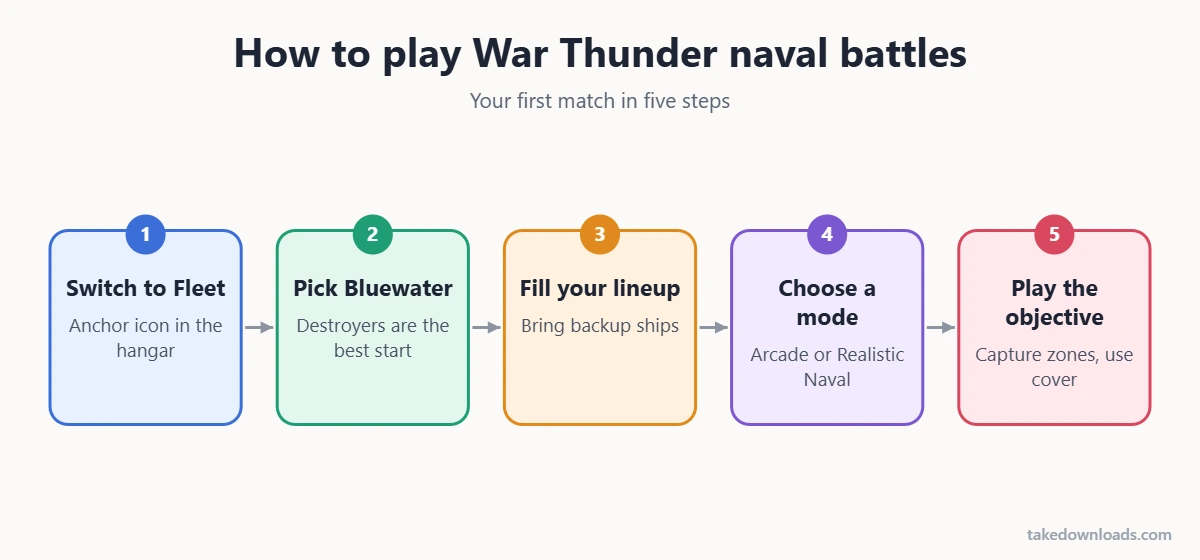
- In the hangar, switch the vehicle type to Fleet (the anchor icon) and choose Bluewater or Coastal.
- Pick a nation — beginners often enjoy the USA for its well-rounded destroyers and cruisers, but every nation has a good starter ship.
- Put a few ships in your lineup so you have backups if you get sunk.
- Choose Arcade or Realistic Naval Battles and press To Battle.
How ships take damage (and sink)
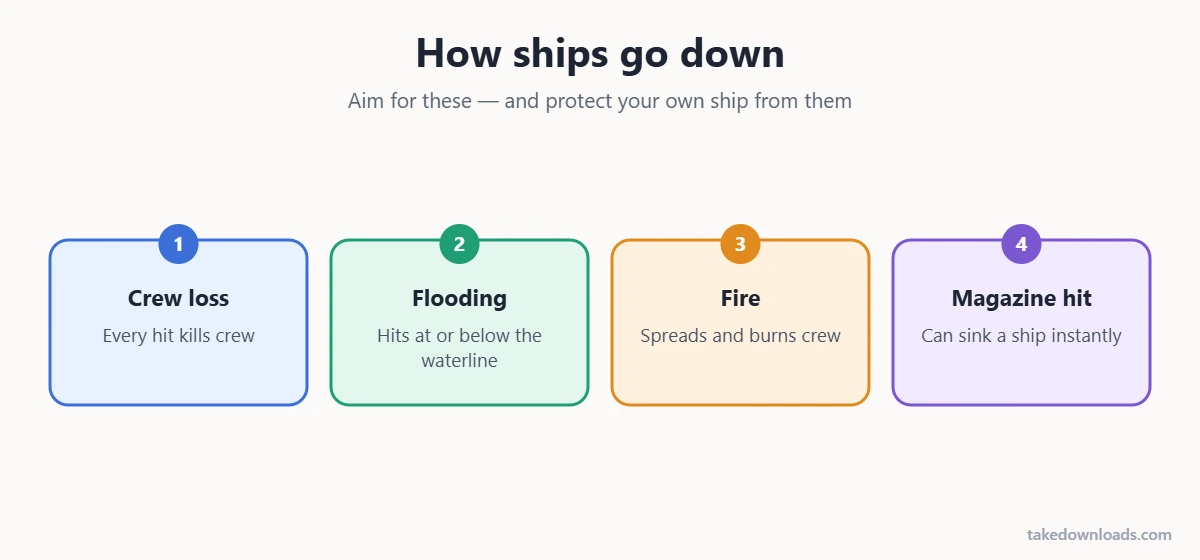
Ships don’t have a simple health bar. A ship is put out of action in a few main ways:
- Crew loss — every hit kills crew; when the crew count drops too far, the ship is lost. The crew bar at the bottom of the screen is your real “health”.
- Flooding — hits at or below the waterline let water in. Too much and the ship sinks.
- Ammunition detonation — hitting a magazine or loaded torpedo tubes can destroy a ship instantly.
- Fires — fires spread, kill crew and can reach the magazines.
So aim for magazines and the waterline when you can, and keep an eye on your own fires and leaks.
Aiming and ammo basics
- Lead your shots. Shells take a long time to fly at range, so aim where the target will be. In Arcade, follow the lead indicator; in Realistic, use the rangefinder and watch your splashes.
- Pick the right ammo. High-explosive (HE) shells are great against lightly armoured boats and destroyers and for starting fires. Semi-armour-piercing (SAP) and armour-piercing (AP) shells are better for punching into cruisers and battleships to reach magazines.
- Use proximity-fused (VT) or anti-air shells against aircraft when your ship has them.
- Torpedoes are powerful but slow. Fire them at long, predictable targets, or into choke points, and fire spreads rather than single torpedoes.
Damage control keys to learn
Bind and use these early — they keep you alive:
- Extinguish fire
- Repair (fix damaged modules)
- Pump water (fix flooding)
You can usually only run one repair action at a time, so prioritise: fire near magazines first, then serious flooding, then repairs.
Winning tactics
Learning how to play War Thunder naval well mostly comes down to surviving longer. These habits help you stay afloat:
- Capture zones. Naval matches are often decided by points. Holding capture zones drains the enemy’s score even if you sink fewer ships.
- Use islands as cover. Break line of sight to reload, repair and avoid being focused.
- Angle your ship. Showing your bow or stern to the enemy makes you a smaller target and hides your magazines.
- Stay with your team. Lone ships get focused by several enemies. Concentrated fire from two or three ships sinks targets far faster.
- Watch for aircraft. Some naval modes let players spawn aircraft. Keep AA gunners active and avoid sailing in a straight line when bombers are inbound.
Best ships to start with
If you are still deciding how to play War Thunder naval, start with destroyers. They are fast enough to reach capture zones early, carry torpedoes and teach you the basics of aiming and damage control. Light cruisers come next and give you more firepower and survivability. Coastal boats are fun but fragile, so treat them as a side project rather than your first tree.
Your first ten naval battles: a simple plan
- Play two or three Arcade matches just to learn how your ship turns, speeds up and reloads.
- Bind the damage-control keys before you go further, so you can react to fire and flooding.
- Practise leading your shots on moving targets at medium range.
- Start playing for capture zones instead of chasing kills.
- Try Realistic once you can reliably hit targets and keep your ship alive.
Arcade or Realistic naval?
Arcade naval battles are shorter and more forgiving, which makes them the best place to learn the basics. Realistic battles slow things down and reward careful positioning and teamwork. Many players learn how to play War Thunder naval in Arcade first, then move to Realistic once they understand damage control and aiming.
Common beginner mistakes
- Sailing in a straight line in the open, where every enemy can line up shots.
- Showing the full side of your ship instead of angling it.
- Ignoring fires until they reach the magazines.
- Firing torpedoes at fast, turning targets far away.
- Leaving the match after the first ship sinks instead of using backups.
Earning faster in naval
Naval research can feel slow, so make every match count: capture points, assist teammates, and play long enough to use your backup ships. Look out for naval Enduring Confrontation (EC) events, which Gaijin often runs at weekends, and use your first-win-of-the-day bonus for each nation. New ships and naval changes are announced in the official War Thunder news.
FAQ
Is naval worth playing in War Thunder?
Yes, if you enjoy slower, more tactical gameplay. It’s less crowded than ground battles, and the ships are some of the most detailed in the game.
Why can’t I sink anything?
Ships are tough by design. Focus on magazines, the waterline and setting fires, and coordinate fire with teammates on one target.
What’s the best first ship?
A Bluewater destroyer from the nation you like. They’re fast, have decent guns and torpedoes, and teach you the basics.
Is it hard to learn how to play War Thunder naval?
Not really. The controls are simple; the challenge is aiming at long range and managing damage. A few evenings of practice in Arcade are enough to feel comfortable.
Do I need to play naval to progress in other trees?
No. Each branch has its own research, so you can play naval only when you feel like a change of pace.
Final thoughts
Now you know how to play War Thunder naval battles: start with a Bluewater destroyer, learn damage control early, aim for the waterline and magazines, and play for capture zones. It’s a slower, more tactical side of the game that rewards patience. For lineups and advice from experienced captains, visit the naval section of the official War Thunder forum.
Need help with the rest of the game? See how to use binoculars, how to rank up faster and how to get squadron points.

Hi, I’m Emam Hasan — an English teacher and the founder of Anirban Lexicon Center in Mirpur, Dhaka. I run Takedownloads to share honest game guides, tips and app reviews that help players choose well and play better. Alongside teaching, I work in digital marketing and SEO, and I enjoy turning complex topics into simple, helpful lessons anyone can follow.